Token Money & Cancellations: Securing Fair Refunds
Learn how to get token money back after cancellation. Understand RERA refund rules, booking terms, penalties, and your rights as a homebuyer.
Overview: How to Get Token Amount Back
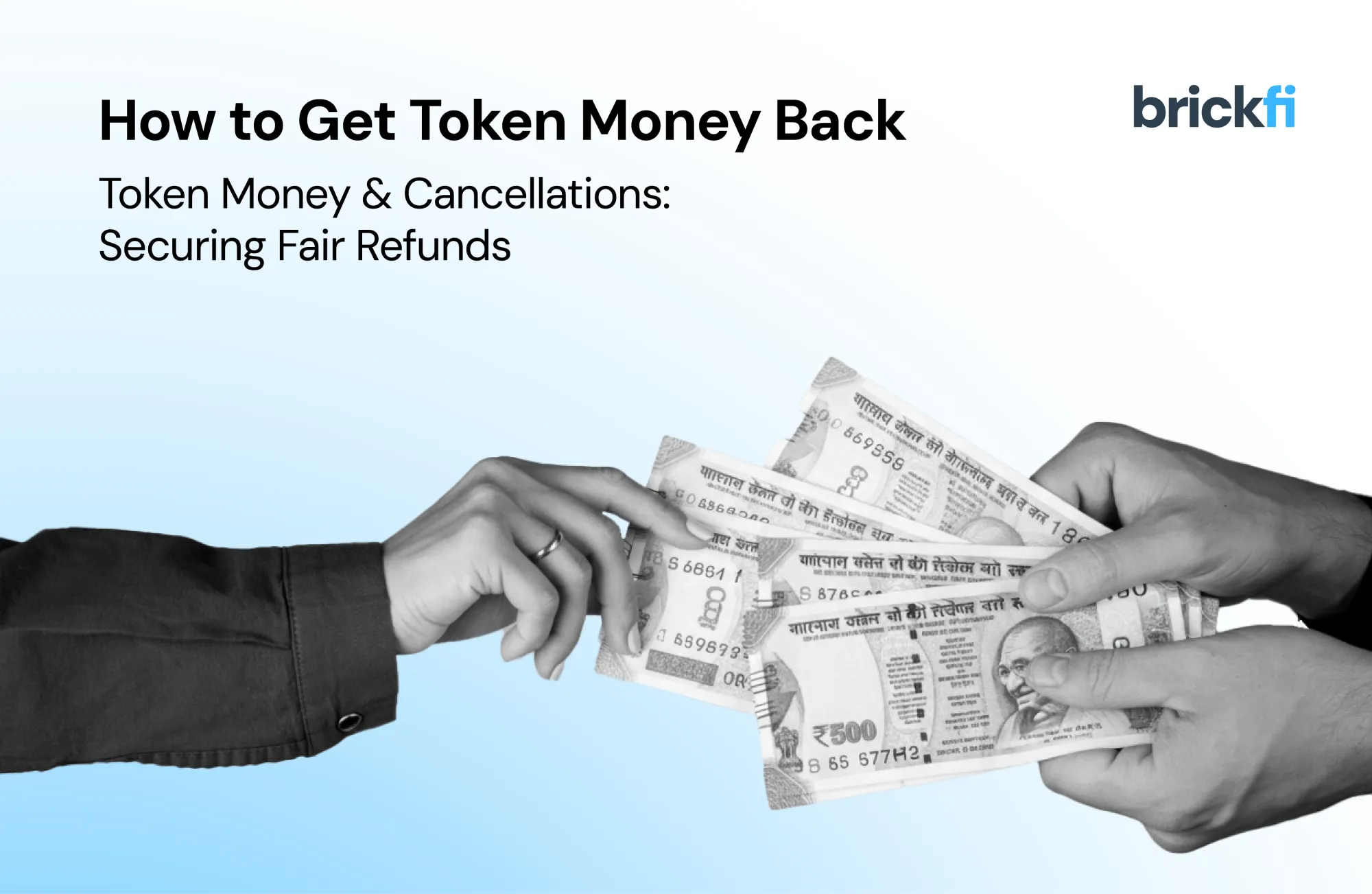
Token money, sometimes called earnest money, is the initial amount a buyer pays to show intent when booking a property. But plans can change, and sometimes cancellation becomes necessary. Knowing how to get the token amount back, especially during an under-construction or mid-booking transaction, can help buyers avoid unnecessary disputes.
Many buyers ask whether token money is refundable after a property booking cancellation. The answer depends on the booking terms, applicable RERA provisions, the reason for cancellation, and the stage at which the buyer exits the transaction. A flat booking cancellation refund should therefore never be assumed without first checking the documents signed at booking.
Token money is meant to demonstrate serious purchase intent, but buyers should know the applicable cancellation charges, conditions for forfeiture, and expected refund timeline before making the payment. Clear written terms matter far more than verbal assurances from a sales representative.
In this article, we explain how to get the token amount back, what affects your refund, when token money may be forfeited, and what steps you can take if a builder refuses an eligible refund.
Key Takeaways
- Whether you receive a refund after a property booking cancellation depends heavily on your booking terms, applicable RERA provisions, and the reason for cancellation.
- Buyers should check the cancellation clause before paying token money, including permitted deductions and the stated refund timeline.
- Cancellation charges can vary depending on the booking agreement, transaction stage, and circumstances leading to cancellation.
- If a builder refuses or delays an eligible refund, buyers can use written notices and applicable RERA or consumer remedies.
- Keep booking documents, payment proofs, written terms, and communication records because they become important when claiming a refund.
Get instant access to expert, data-driven property insights.
Request your free Brickfi investment report now and make smarter real estate decisions today.
What Do Token Money and Booking Terms Mean?
Token money is a small upfront payment made by the buyer to a seller or builder when provisionally agreeing to purchase a property. It signals serious intent and may temporarily reserve the property. Booking terms define the conditions governing that payment, including whether it is refundable, applicable deductions, cancellation rights, and the refund timeline.
Before paying, buyers should specifically look for the cancellation clause in the booking form, allotment document, application form, or MoU. Verbal commitments offer considerably weaker protection when a dispute arises.
Always insist on a token money receipt or written booking document containing:
- Property and unit details
- Amount paid
- Payment date
- Conditions governing cancellation
- Applicable cancellation charges
- Refund conditions
- Parties involved in the transaction
These records become particularly important if you later need to establish how to get the token amount back from the builder.
RERA and Property Booking Cancellation Rules
RERA provides important protections for homebuyers, but refund rights depend on why the booking is being cancelled and the provisions applicable to the transaction. Buyers should therefore be cautious about assuming that every voluntary cancellation automatically carries the same deduction or fixed refund period.
The booking agreement and applicable RERA rules should be read together when evaluating a property booking cancellation.
A particularly important protection appears under Section 13 of RERA. A promoter cannot accept more than 10% of the cost of an apartment, plot, or building as an advance or application fee without first entering into a written and registered Agreement for Sale.
For a Karnataka RERA booking cancellation, buyers should review the terms contained in their booking and allotment documents alongside the applicable Karnataka RERA framework. If the cancellation results from promoter default, delay, or another issue covered by RERA, the buyer may have additional remedies.
The central point is simple: do not assume that a builder can retain any amount merely because the booking form labels it “non-refundable.” The cancellation clause, circumstances of cancellation, and applicable law all matter.
Get instant access to expert, data-driven property insights.
Request your free Brickfi investment report now and make smarter real estate decisions today.
Situations That Affect Your Flat Booking Cancellation Refund
Whether a buyer receives a complete or partial flat booking cancellation refund depends on why the transaction ended.
- If the builder is responsible: If the promoter cannot fulfil contractual or statutory obligations, the buyer may have stronger grounds for seeking a refund and other applicable remedies.
- If the buyer voluntarily cancels: The builder may rely on the agreed cancellation clause and seek deductions according to the booking terms and applicable law.
- Stage of cancellation: Cancelling shortly after booking can create a different position from cancelling after an Agreement for Sale has been executed or substantial transaction milestones have passed.
- Project and regulatory status: Applicable RERA provisions and the project’s registration status can affect the remedies available.
- Written terms: Clear documentation around refunds and cancellation charges can significantly reduce ambiguity.
These factors are also important when determining when token money can be forfeited. There is no sensible universal answer without considering the contract and circumstances behind the cancellation.
Step by Step: How to Get Token Amount Back
If you need to cancel a property booking, approach the refund systematically rather than relying on verbal conversations with the sales team.
1. Review the booking documents
Read the booking form, application, MoU, allotment letter, and any other documents you signed. Identify the cancellation clause, permitted deductions, and stated refund conditions.
2. Send a formal cancellation request
Notify the builder or seller in writing. Mention the property, booking details, amount paid, reason for cancellation where relevant, and the refund you are requesting.
3. Ask for a written calculation of deductions
If the builder proposes cancellation charges, ask for a clear written explanation showing how the amount has been calculated and which contractual provision supports it.
4. Check the project’s RERA status
For a Karnataka RERA booking cancellation, verify the project through the official Karnataka RERA portal and understand whether the circumstances give you remedies under RERA.
5. Keep evidence
Preserve payment receipts, booking documents, cancellation requests, emails, messages, and responses from the builder.
6. Escalate when necessary
If an eligible refund is being unfairly withheld, legal advice may help determine whether you should send a formal notice, use RERA remedies, or pursue another appropriate dispute resolution route.
Brickfi also has a detailed guide explaining RERA complaints, documentation, and timelines if the matter requires formal escalation.
Get instant access to expert, data-driven property insights.
Request your free Brickfi investment report now and make smarter real estate decisions today.
Can Builder Keep Booking Amount After Cancellation?
The answer to can builder keep booking amount is not automatically yes or no.
A builder may seek to retain or deduct an amount where the contract permits it, and the deduction is legally enforceable. However, the existence of a non-refundable statement does not mean buyers should accept every forfeiture without examining the underlying agreement and applicable law.
Ask the builder to identify:
- The cancellation clause being relied upon
- The reason for forfeiture
- The amount being deducted
- How the cancellation charges were calculated
- When the remaining refund will be processed
If the builder caused the cancellation through delay, non-performance, material changes, or another contractual or regulatory default, the buyer’s position may be different from a voluntary cancellation.
This distinction is central to understanding when token money can be forfeited.
What Builders Often Argue and How Buyers Should Respond
Disagreements around a token money refund in a Bangalore transaction often begin with the builder relying on the booking form while the buyer relies on verbal commitments made during the sale.
If the builder says the token money is completely non-refundable, ask for the contractual provision supporting that position and have the clause reviewed where the amount is substantial.
If internal approvals are delaying the refund, ask for the status and expected refund timeline in writing.
If the builder claims that the buyer defaulted, request the relevant documentation rather than relying on a verbal explanation.
If cancellation charges appear different from what was communicated at booking, compare them against the signed documents.
The objective is not to threaten legal action immediately. It is to establish what was agreed, what happened, and what amount can legitimately be retained.
Get instant access to expert, data-driven property insights.
Request your free Brickfi investment report now and make smarter real estate decisions today.
Token Money Refund Bangalore: What Buyers Should Check
For a token money refund in a Bangalore property transaction, the same basic principles apply: documentation first, verbal assurances second.
Before requesting a refund, check whether the property is RERA registered, what your booking documents say, whether an Agreement for Sale has already been executed, and what event triggered the cancellation.
For a Karnataka RERA booking cancellation, regulatory remedies may become relevant where the promoter has breached obligations covered by RERA. A voluntary buyer-initiated cancellation, however, may depend more heavily on contractual terms.
Buyers should therefore avoid assuming that every cancellation follows an identical process simply because the property is located in Bangalore.
Tax and GST Implications
If GST was collected on payments for an under-construction property, cancellation may require corresponding tax and accounting adjustments by the developer. Buyers should ask for a clear statement showing how the refund and any applicable tax adjustment have been treated.
Stamp duty and registration-related payments require separate consideration because they involve statutory payments and different refund procedures. If significant amounts have already been paid, professional tax or legal advice may be appropriate.
Get instant access to expert, data-driven property insights.
Request your free Brickfi investment report now and make smarter real estate decisions today.
What Refund Timeline Should You Expect?
The refund timeline should first be checked against your booking agreement, allotment terms, applicable RERA provisions, and the circumstances leading to cancellation.
Do not rely solely on a salesperson saying that the refund will be processed “soon.” Ask for the expected date in writing.
If that date passes without payment, follow up formally and preserve the correspondence. Where a refund is legally or contractually due but continues to be withheld, the next step may involve formal legal or regulatory escalation.
For a flat booking cancellation refund, written timelines are considerably easier to enforce than informal promises.
Always Protect Yourself Before Paying Token Money
The easiest refund dispute to handle is the one prevented before payment.
Before transferring token money:
- Pay through traceable banking channels rather than cash.
- Ask for a written receipt immediately.
- Read the cancellation clause before signing.
- Confirm applicable cancellation charges.
- Ask when token money can be forfeited under the agreement.
- Verify the project’s RERA details.
- Keep copies of all documents and communication.
Most importantly, do not treat the token amount as insignificant simply because it is small relative to the total property price. The terms attached to that payment can determine what happens if you decide not to proceed.
Get instant access to expert, data-driven property insights.
Request your free Brickfi investment report now and make smarter real estate decisions today.
Conclusion: Securing a Fair Token Money Refund
Understanding how to get the token amount back begins before cancellation happens. Buyers should know the cancellation clause, applicable deductions, refund conditions, and documentation requirements before paying the booking amount.
If a property booking cancellation becomes necessary, communicate in writing, ask for a clear calculation of any deductions, and preserve your evidence. If you are pursuing a token money refund Bangalore dispute involving a RERA-registered project, applicable Karnataka RERA remedies may also be worth examining.
At Brickfi, we help buyers examine property decisions with greater clarity, including builder credibility and risks that can affect a transaction before significant money is committed.
Knowing how to get the token amount back is useful. Knowing exactly what you agreed to before paying is better.
FAQs: How to Get Token Amount Back
1. How to get token amount back after cancelling a property booking?
Start by checking your booking documents and cancellation clause. Submit the cancellation request in writing and ask the builder to provide the refund amount, deductions, and timeline. If an eligible refund is withheld, applicable legal or RERA remedies may be considered.
2. Can the builder keep the booking amount after cancellation?
Whether a builder can retain the booking amount depends on the agreement, reason for cancellation, transaction stage, and applicable law. Ask the builder to identify the contractual basis for any forfeiture or deduction.
3. When can token money be forfeited?
Token money may be subject to forfeiture or deductions where valid booking terms allow it and the buyer cancels under circumstances covered by those terms. The enforceability of the clause depends on the agreement and applicable law.
4. How does a Karnataka RERA booking cancellation work?
The outcome depends on whether the cancellation results from buyer choice or promoter default and which RERA provisions apply. Buyers should verify the project and review their booking and Agreement for Sale documents before determining available remedies.
5. What cancellation charges apply to a flat booking cancellation refund?
There is no single cancellation charge applicable to every property booking. The amount depends on the signed terms, transaction stage, reason for cancellation, and applicable legal provisions. Buyers should request a written breakdown of any deduction.
Get instant access to expert, data-driven property insights.
Request your free Brickfi investment report now and make smarter real estate decisions today.