
Metro and Airport Connectivity The Real Reason North Bengaluru Homes Carry a Twenty Percent Premium
Overview: North Bangalore Real Estate Growth
North Bengaluru is entering a completely different kind of growth cycle. For years, developers spoke about the potential of the Airport Corridor, but buyers felt the distance. That narrative has quietly changed. With the Bengaluru metro lines expanding toward the north and the airport becoming one of the busiest in the country, the region has become one of the most valuable real estate corridors in the city.
The combination of metro access and airport proximity has turned into a powerful pricing driver. In fact, several micro pockets in North Bengaluru have already recorded a premium of nearly twenty percent compared to similar projects in areas served only by metro lines. This dual connectivity gives the region a unique advantage that no other Bengaluru zone enjoys at the moment.
This blog explains why this premium exists, which locations benefit the most, how rental yields behave near this corridor, and what this means for homebuyers and investors planning long-term moves.
Key Takeaways
- North Bengaluru is one of the few zones where metro access and airport connectivity overlap, which has created a strong value premium.
- Localities like Yelahanka, Jakkur, Hebbal, Bagalur, and Devanahalli are seeing the highest price uplift from dual connectivity.
- Rental yields near the airport corridor are stronger because of steady demand from aviation employees and frequent travelers.
- Price appreciation near the airport has outpaced the appreciation in metro-only areas in North Bengaluru.
- Developers with projects located along the airport metro connector are expected to see the strongest long-term growth.
The Power of Dual Connectivity: Why Metro and Airport Access Change Everything
Real estate values rise the moment a location becomes easier to reach. When you combine two major connectivity networks in the same corridor the effect multiplies. This is exactly what has happened in North Bengaluru. The airport itself attracts steady traffic from business travelers, aviation staff, hospitality workers, and global companies. The metro solves the everyday travel gap for office goers and residents.
Together, the two forms of connectivity have created a corridor that offers both global access and daily convenience. A family living here can reach the airport with ease and at the same time use the metro for office commutes toward central or eastern Bengaluru. People who travel often for work especially prefer staying close to this belt, which has created constant demand for both rental homes and long-term residences.
This is the reason builders are concentrating premium projects along the metro and airport routes and why early buyers in these areas are seeing faster appreciation than other zones.
What the Yellow Metro Line Means for North Bengaluru
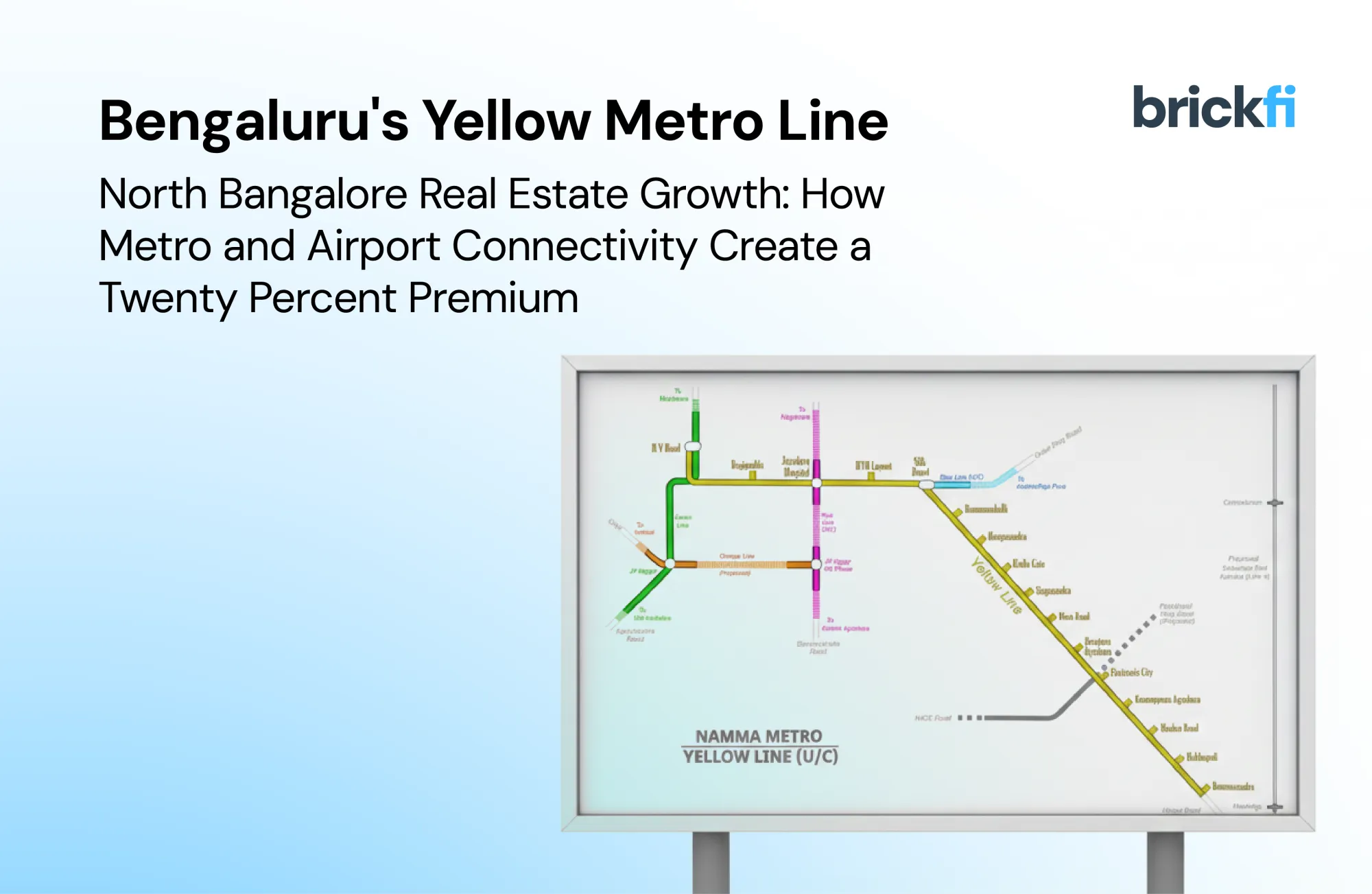
The Yellow Metro Line is expected to reshape the region in a way that mirrors what the Purple Line did for Whitefield. The moment the Yellow Line reaches the key locations of Yelahanka, Jakkur, and Bagalu,r the entire belt becomes more accessible for thousands of residents and employees working in the north corridor.
Manyata Tech Park, which is one of the largest employment hubs in the city, will also benefit from improved last-mile connectivity. Daily commute times are reduced, and the micro markets around the line become more attractive to families who want predictable travel. As seen repeatedly in Bengaluru metro connectivity carries a large pricing impact in the long run.
Once the Yellow Line reaches operational stability, the price gap between connected and non-connected micro pockets in the north is expected to widen further.
Which North Bengaluru Micro Markets Are Seeing the Biggest Price Uplift
The premium is most visible in locations that enjoy both the Airport Corridor advantage and the upcoming metro connectivity. Hebbal has held a premium reputation for years because of its flyover and airport access. Jakkur has seen a sharp rise as many families choose it for peaceful surroundings and excellent connectivity.
Yelahanka has emerged as a stable long term family hub with good schools and social infrastructure. Bagalur is now attracting attention because of planned commercial zones and its closeness to the airport metro connector. Devanahalli continues to benefit from its strategic location near Kempegowda International Airport and is widely seen as the next major investment zone.
These pockets have shown better appreciation than metro only regions because they serve a wider audience including frequent travelers and global businesses.
Airport Influence: Proximity to Kempegowda Airport Boosts Rental Yields
Rental demand near the airport has remained strong for years because the airport is a massive employer by itself. Along with this demand from hospitality workers, airline staff, logistics teams, and business travelers keeps rental occupancy remains consistently high. This is something metro-only neighborhoods do not experience at the same scale.
North Bengaluru has a steady flow of tenants who prefer staying closer to the airport rather than traveling long distances for every shift or early morning flight. This reliable demand keeps rental yields stable and, in many cases, higher than traditional Bengaluru micro markets. As new office spaces and logistics hubs become functional in the coming years, this rental curve is expected to strengthen further.
Price Growth Near Airport Areas Compared to Metro Only Locations
A very interesting trend has emerged in the last few years. Micro markets that have only metro advantage are growing at a predictable rate, while micro markets that enjoy both metro and airport connectivity are showing faster appreciation.
The reason is simple. Metro-only areas attract local demand. Airport and metro-connected areas attract both local demand and national-level interest from people who fly frequently and prefer northern Bengaluru for convenience. This layered demand structure pushes prices upward more aggressively and gives developers confidence to launch premium projects.
The twenty percent premium visible in several pockets today is the outcome of this combined influence.
Developer Projects That Benefit the Most From Dual Connectivity
Developers with land parcels along the airport metro connector are naturally positioned to benefit the most from this long-term growth cycle. Projects located around Jakkur, Yelahanka, Bagalur, and Devanahalli are witnessing strong buyer interest even in early stages.
Builders have started creating integrated communities with premium amenities because buyers in this belt prefer long-term living with lifestyle benefits. Since the region will eventually serve both office users and airport-driven tenants, the demand for high-quality gated communities is increasing every year.
Projects closer to the Airport Corridor and the Yellow Metro Line are likely to see long-term demand from families, NRIs, and professionals who travel frequently for work.
How BrickFi Helps Buyers Navigate This High-Growth Corridor
The biggest challenge for buyers in North Bengaluru is choosing the right micro market and the right project at the right stage of development. BrickFi helps buyers understand real appreciation patterns, verify project quality, and compare growth projections across multiple pockets of the Airport Corridor and metro-connected zones.
With so many new launches arriving every year, buyers need a reliable way to cut through marketing noise and focus on verified research. BrickFi plays this role by simplifying data, showing real value trends, and helping buyers make confident long-term decisions.
Get instant access to expert, data-driven property insights.
Request your free Brickfi investment report now and make smarter real estate decisions today.
Conclusion
The metro and the airport have created a rare combination that very few Indian cities enjoy. North Bengaluru is experiencing the benefits in real time. Prices are rising faster, rental demand is stronger and the overall economy of the region is shifting upward with every new commercial and residential announcement. The twenty percent premium that has emerged is not a bubble. It is the result of real connectivity strength.
For anyone exploring homes in this corridor, a clear understanding of micro market strengths is essential. With trusted research and verified information, BrickFi helps homebuyers and investors navigate this high-growth region with clarity rather than guesswork.
FAQs: Bengaluru's Yellow Metro Line
1. Why does dual connectivity in North Bengaluru create a price premium?
Because both metro and airport access improve convenience and expand the buyer base, which leads to stronger demand and higher appreciation.
2. Which areas gain the most from metro and airport access?
Jakkur, Yelahanka, Hebbal, Bagalu,r and Devanahalli benefit the most because they are closest to the Airport Corridor and upcoming metro lines.
3. Does airport proximity improve rental yields?
Yes rental demand is strong because aviation teams, hospitality workers, and frequent travelers prefer staying near the airport.
4. Are prices rising faster near the airport compared to metro-only regions?
Yes several pockets near the airport corridor have seen price appreciation that is stronger than metro-only localities.
5. Which projects will benefit from the airport metro connector? Projects located along the Yellow Metro Line and those closer to the Airport Corridor are expected to see the strongest long-term demand.
Get instant access to expert, data-driven property insights.
Request your free Brickfi investment report now and make smarter real estate decisions today.